
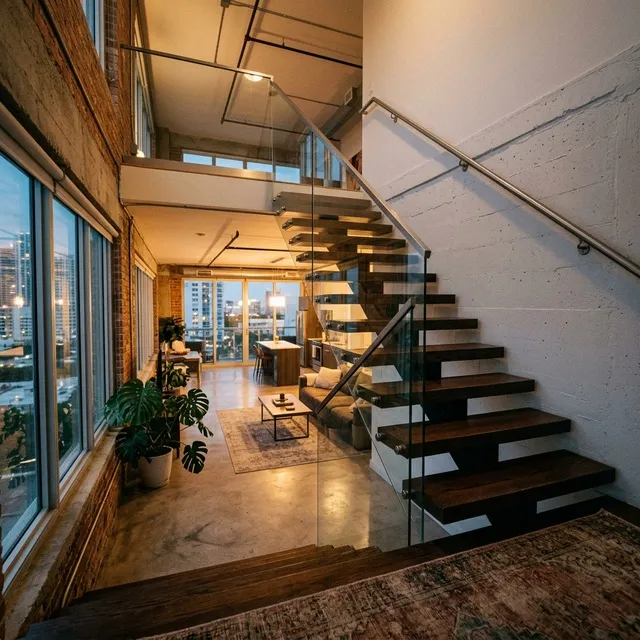
Loft Conversion Floating Stair Retrofit in Jacksonville, FL
Floating stairs added to attics, mezzanines, and split-levels with minimal disruption to your occupied home.
Jacksonville Floating Stairs retrofits floating staircases into existing occupied homes without the chaos that typically comes with structural work. We plan the work sequence around your household and protect finished surfaces throughout installation.
Jacksonville's housing stock has a lot of retrofit opportunities. Orange Park and Middleburg have many 1970s and 1980s split-levels where the original utility stairs are ready for replacement. Riverside and Avondale bungalows with converted attic spaces often need proper code-compliant access. Newer homes in St. Johns County are adding mezzanine offices above great rooms and need floating stairs that fit the space without a major structural renovation.
Retrofit work is more constrained than new construction. The floor opening may be fixed. Headroom might be tight. Existing walls at the stair location may not have the framing depth needed for standard anchor systems. We assess all of these constraints before proposing a design — not after fabrication has started.
We also coordinate with the homeowner on protection and phasing. The goal is to complete structural work during a focused window, minimize the time the stair opening is blocked, and hand back a finished staircase — not a job site that lingers for weeks. Most retrofit installations run 5 to 10 business days of active work after the permit is in hand.
Retrofit done right.
Deposit-backed site visit. We assess constraints before proposing a design.
How We Handle Retrofit Installations
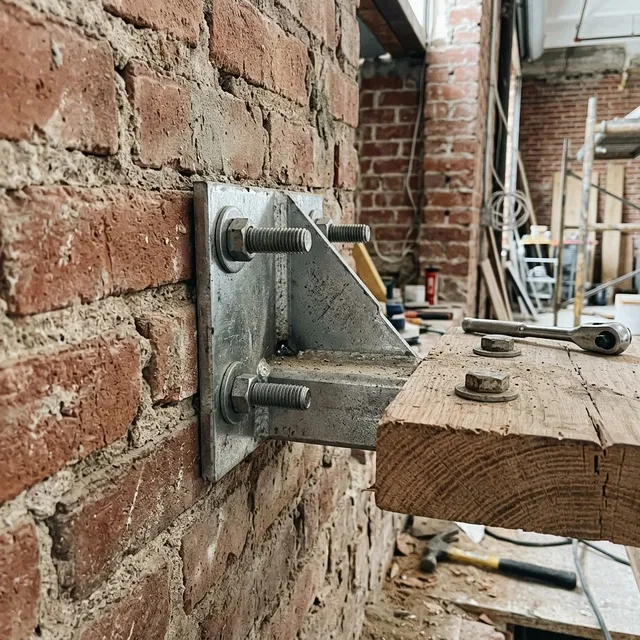
Retrofit constraints change the design
Retrofit jobs are rarely about a blank canvas. You're working around existing framing, a finished lower floor, a fixed opening, and whatever headroom the house already gives you.
That is why loft conversions often benefit from floating stair systems in the first place. They keep the footprint tighter and the room more open, but only if the stair is shaped around the existing structure instead of forced into it.
- Layout decisions based on the opening you actually have today
- Structural reinforcement planned with minimal disruption to adjacent finishes
- Cleaner circulation to lofts, mezzanines, and second-floor add-ons
Loft Retrofit — FAQ
Can floating stairs be added to an existing attic conversion?
What if headroom is tight in my split-level home?
How much damage to existing finishes should I expect?
Do Orange Park split-level homes have the right framing for cantilevered stairs?
Can I stay in my home during the installation?
Floating Stairs Added to Your Existing Jacksonville Home
We assess the constraints first. Then we design around them.